Blog
Milia on Face (Milk Spots): Causes, Treatment & Prevention Tips


If you’ve ever noticed tiny white bumps on your skin, you might be dealing with milia on the face, a common yet harmless skin condition that often appears around the cheeks, eyes, and forehead.
These small keratin-filled cysts, sometimes called “milk spots,” are not dangerous but can be a cosmetic concern for some individuals.
What is Milia on the Face (Milium)?
Milia (plural for milium) is a common skin condition characterised by tiny keratin-filled cysts that typically appear in clusters on the face, frequently on the nose, cheeks, and chin. They can also be found elsewhere on the face, such as the eyelids and forehead, and even on other parts of the body.
Often referred to as “milk spots” or “oil seeds,” facial milia are not a form of acne, although their appearance might lead to confusion with whiteheads. These bumps are benign and harmless. They generally do not cause pain, discomfort, or itchiness, although rare forms can be pruritic (itchy). Milia are also not contagious and do not spread from person to person.
In newborn babies, milk spots (milia) are particularly common, affecting approximately 40% to 50% of full-term infants. In these cases, milia almost always resolve on their own without treatment within a few weeks to a couple of months.
What Causes Milia on the Face?
Milia form when dead skin cells, or specifically keratin, become trapped beneath the skin’s surface. Normally, the body naturally sheds old skin cells to allow new ones to grow. When this natural exfoliation process is disrupted, the dead skin cells can harden and become trapped, forming these small cysts.
Milia are broadly classified into two types: primary and secondary. Primary facial milia develop spontaneously and are the most frequent type, often present at birth (known as neonatal milia). They are believed to originate from the sebaceous collar of vellus hair follicles.
On the other hand, secondary milia bumps typically affect older children and adults and result from damage or trauma to the skin. Common triggers include skin damage from injuries and burns, long-term use of topical steroid creams, and underlying skin conditions like eczema or rosacea.
How to Prevent Milia/Milk Spots from Forming?

Although it’s not always possible to prevent milia bumps, particularly congenital forms, adopting a consistent and appropriate skincare routine can help reduce the likelihood of them developing in adults and prevent recurrence. Key preventative strategies include:
- Regular Cleansing: Washing your face twice daily with a gentle, paraben-free soap helps to remove dirt, sweat, and impurities that could clog pores and interfere with natural exfoliation.
- Gentle Skin Peeling: Incorporating gentle skin cell turnover into your routine 2–3 times a week can help prevent keratin build-up. Look for exfoliating cleansers containing ingredients such as salicylic acid, citric acid, or glycolic acid. However, avoid over-exfoliating, as this can irritate the skin.
- Sun Protection: Daily application of a light facial sunscreen with an SPF of 30 or higher is essential. Sunscreen protects the skin from harmful ultraviolet rays and can minimise irritation that may lead to milk spots. Opt for sunscreens with a mineral oil base, which are less likely to clog pores.
- Avoid Heavy Products: Limiting or temporarily avoiding very thick or heavy facial creams and ointments can prevent pore blockage and irritation.
- Medication Management: Use steroid medications strictly as prescribed by your doctor and avoid long-term use, as prolonged application is a known cause of secondary milia.
Learn more: Melasma treatment in Malaysia
Home Remedies for Face Milia
For adults dealing with facial milia, certain home care practices might aid resolution and prevent new milk spots.
- Do Not Pick or Pop: It is paramount not to pick, poke, or attempt to squeeze or remove milia yourself. Doing so is ineffective and can lead to bleeding, scabbing, scarring, or introduce bacteria, resulting in infection.
- Cleanse and Steam: Continue to wash your face daily with a mild soap and gently pat your skin dry. Steaming your face can help to gently open pores, potentially releasing trapped skin flakes or irritants. This can be achieved by sitting in a steamy bathroom (e.g., after running a hot shower) for 5-8 minutes.
- Gentle Exfoliation and Facial Peels: As part of your regular skincare, gentle exfoliation (1-2 times per week) with products containing salicylic acid, citric acid, or glycolic acid can be beneficial. Facial peels with these same exfoliating ingredients might also assist if they are already part of your established routine. However, if you are new to facial peels, it’s advised not to start them solely for milia, as your skin may be sensitive to the ingredients and potentially worsen the condition.
- Topical Retinoids: Some research suggests that topical retinoid creams (containing vitamin A or its lower-strength form, retinol) can help eliminate milia. Apply such products once daily to clean, dry skin. It is essential to use sunscreen every day when using retinoids, as they make your skin more susceptible to sun damage.
When to See a Dermatologist
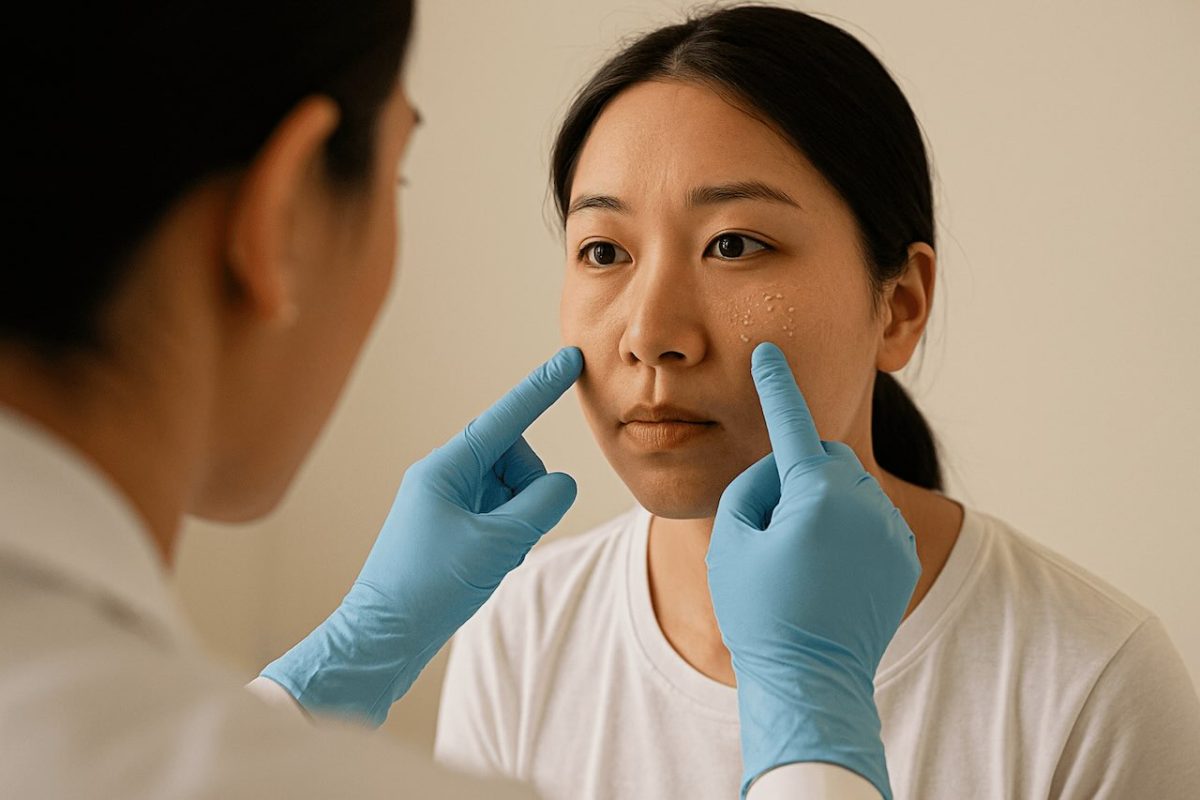
While milk spots are generally benign and may resolve spontaneously, especially in infants, it is advisable to consult a healthcare professional or dermatologist if:
- Your milia do not disappear after a few weeks or months.
- Your baby experiences recurring outbreaks of milia.
- You are concerned about the appearance of the milia.
- You are uncertain about the diagnosis, as milia can sometimes be confused with other skin conditions, such as comedones or different types of cysts.
Milia Removal & Treatment Options by Professionals
If milia persist or are a cosmetic concern, a medical professional can offer various treatment options. It is worth noting that some procedures may carry a risk of scarring.
- Manual Extraction (De-roofing): This procedure involves a professional using a sterile needle or blade to create a tiny opening in the milium, followed by gentle pressure to extract the keratin plug. This should never be attempted at home due to the significant risk of infection and scarring.
- Cryotherapy: Milia can be frozen off using extreme cold, typically with liquid nitrogen.
- Diathermy: This method uses extreme heat to remove the milia.
- Laser Surgery: Laser treatment is another option for removing or the cosmetic extraction of milk spots.
- Curettage: This involves numbing the affected area, removing the milia, and then sealing the skin using a hot wire.
- Dermabrasion: A skin resurfacing technique that can also be used to remove milia.
- Prescription Medications: A doctor may prescribe stronger topical retinoids (e.g., tretinoin cream) or, in certain cases, oral antibiotics such as minocycline, particularly for conditions like milia en plaque.
Learn more: Laser treatments in Malaysia
Take the Next Step with Dr Chong Clinic
If persistent milia or other skin concerns are affecting your confidence, professional help is just a consultation away. Dr Chong Clinic, a trusted aesthetic clinic in Malaysia known for personalised care, advanced technology, and LCP-certified doctors, offers tailored skin treatments to help you achieve clearer, smoother skin safely and effectively.
Book your consultation today and let us help you restore your skin’s natural clarity and glow. With over 20 clinics across Malaysia, expert care is always within reach.
Here are four additional FAQs about milia, providing further information not extensively covered in the previous article draft:
Frequently Asked Questions
1. What are milia, and what causes them to appear on the skin?
Milia are small, white or yellowish bumps on the skin, often grouped on the face. They form when dead skin cells or keratin become trapped just beneath the skin’s surface, leading to tiny cysts. While harmless, they can be persistent, particularly in adults.
2. Can milia appear inside the mouth, especially in babies?
Yes, milia can appear inside a baby’s mouth, known as oral inclusion cysts. For example, ‘Epstein pearls’ and ‘Bohn nodules’ are found near the roof of the mouth and gums or palate respectively. These are harmless and usually clear up naturally.
3. Can milia indicate a more significant health concern or be linked to genetics?
While usually harmless, extensive or unusual milia can sometimes be a symptom of rare, inherited genetic skin conditions. If milia are persistent, widespread, or accompanied by other skin or health issues, a dermatologist can assess if it’s part of a broader condition.
4. Are all small white bumps on the skin actually milia?
Not necessarily; some bumps may clinically resemble milia but are different conditions. These “milia-like lesions” might be, for example, keratin plugs within hair follicles or other benign growths. A skin professional can accurately diagnose the bumps for appropriate treatment.
*All images used in this article are AI-generated.