Blog
Skin Tags (Acrochordons): Causes, Removal, and Prevention Tips

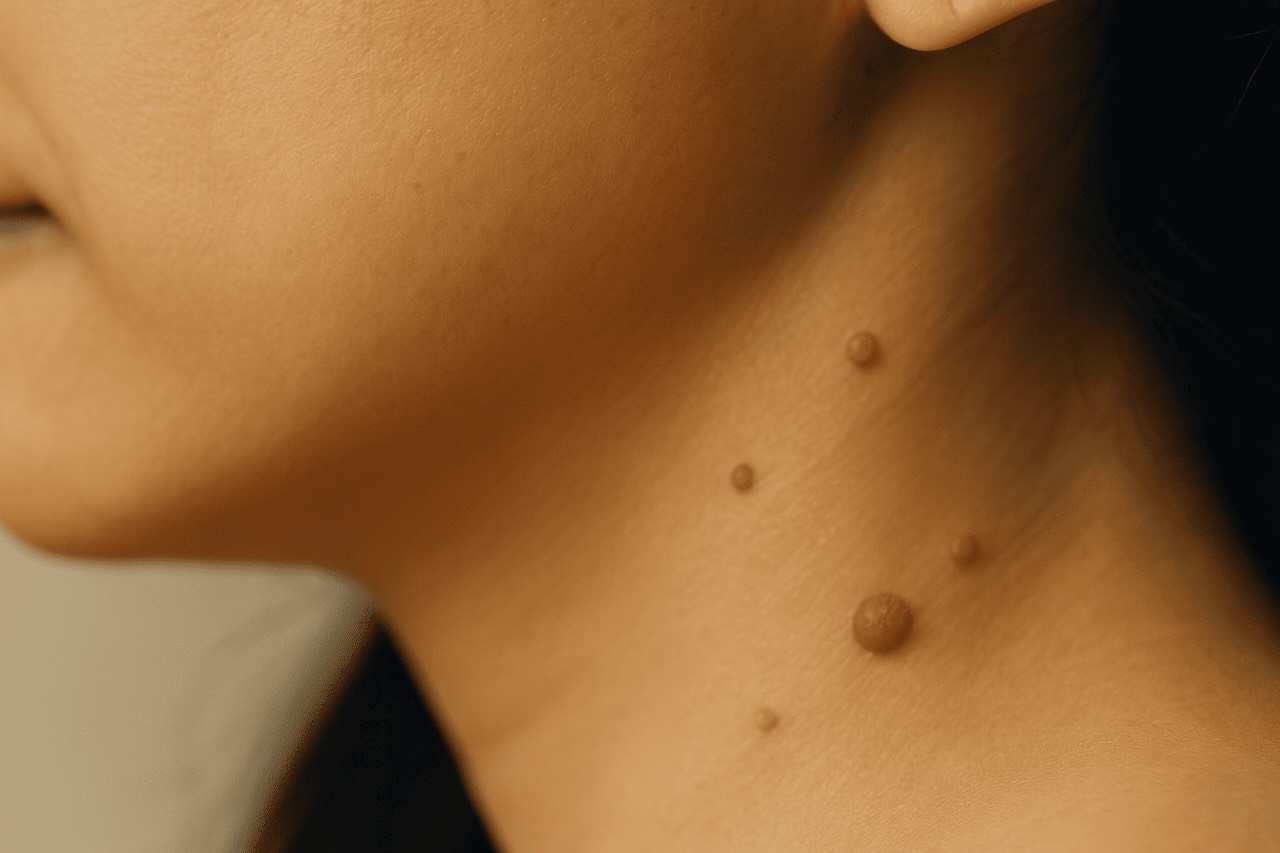
Skin tags, medically known as acrochordons, are remarkably common, with approximately 50% to 60% of adults experiencing these small, benign skin growths at some point in their lives. Often appearing as tiny flaps or soft outgrowths of skin, they are generally harmless but can be a source of cosmetic concern or irritation for many.
Understanding what skin tags are, their causes, and the safest approaches to manage them can provide significant peace of mind.
What are Skin Tags?
Skin tags are benign, non-cancerous tumours of the skin. They are composed of a core of fibres and ducts, nerve cells, and fat cells, and are covered by an epidermis, which is essentially normal skin tissue. These growths typically protrude from the skin, often on a stalk or pedicle, giving them a distinctive appearance.
Their appearance can vary, but they are usually flesh-coloured, brown, or pinkish-red. While often small, ranging from 1 to 5 millimetres (mm) in diameter, some can grow larger, rarely reaching 1 to 2 centimetres (cm). The surface of skin tags can be either smooth or irregular. They are generally soft to the touch and usually do not cause pain or itching unless they become inflamed or infected due to friction or trauma.
Skin tags commonly develop in areas where skin rubs against skin or clothing, referred to as skin folds. The most frequent locations include the:
- Neck
- Underarms (axilla)
- Groin area
- Under the breasts
- Eyelids
- Upper chest
They often go unnoticed until they are in a prominent place or are repeatedly rubbed or scratched, for instance, by clothing or jewellery. Sometimes, skin tags may even rub off or fall off painlessly on their own.
Causes and Risk Factors of Skin Tags
The precise cause of skin tag formation is not entirely understood. However, several factors are believed to contribute significantly to their development:
- Friction from skin-to-skin contact is considered a primary factor, explaining their common occurrence in skin folds.
- Age is a significant contributing factor, as skin tags become more common with increasing age, particularly after the fourth decade of life.
- Genetics play a role, as there may be a hereditary component, suggesting they tend to run in families.
- Obesity and diabetes are associated with skin tag development.
- Pregnancy and other hormonal imbalances, such as elevated levels of female sex hormones, progesterone, and oestrogen, can also make individuals more prone to skin tags.
- Certain genetic conditions like Birt-Hogg-Dubé syndrome and tuberous sclerosis, as well as Polycystic Ovarian Syndrome (PCOS), have also been associated with skin tags.
Distinguishing Skin Tags from Other Growths
It can be challenging to differentiate skin tags from other skin growths, such as moles or warts, without a professional medical eye. However, knowing the key differences is crucial, especially since some other growths can be more serious.
- Moles are collections of melanocytes, the cells responsible for producing skin pigment. They are often darker (tan, brown, or black) than skin tags and tend to have a wider base rather than protruding on a stalk. Unlike skin tags, moles can sometimes develop into melanoma, a type of skin cancer.
- Warts are caused by human papillomavirus (HPV) infection and are contagious. They typically have a scaly, rough, and dry texture with distinct margins. While a filiform wart may resemble a skin tag due to its elongated, stalk-like appearance and occurrence in skin folds, its viral origin and rougher texture set it apart.
In some rare instances, basal cell skin cancers or neurofibromas can also resemble skin tags. Therefore, if there is any uncertainty about a skin growth, professional evaluation is strongly recommended.
When to See a Doctor
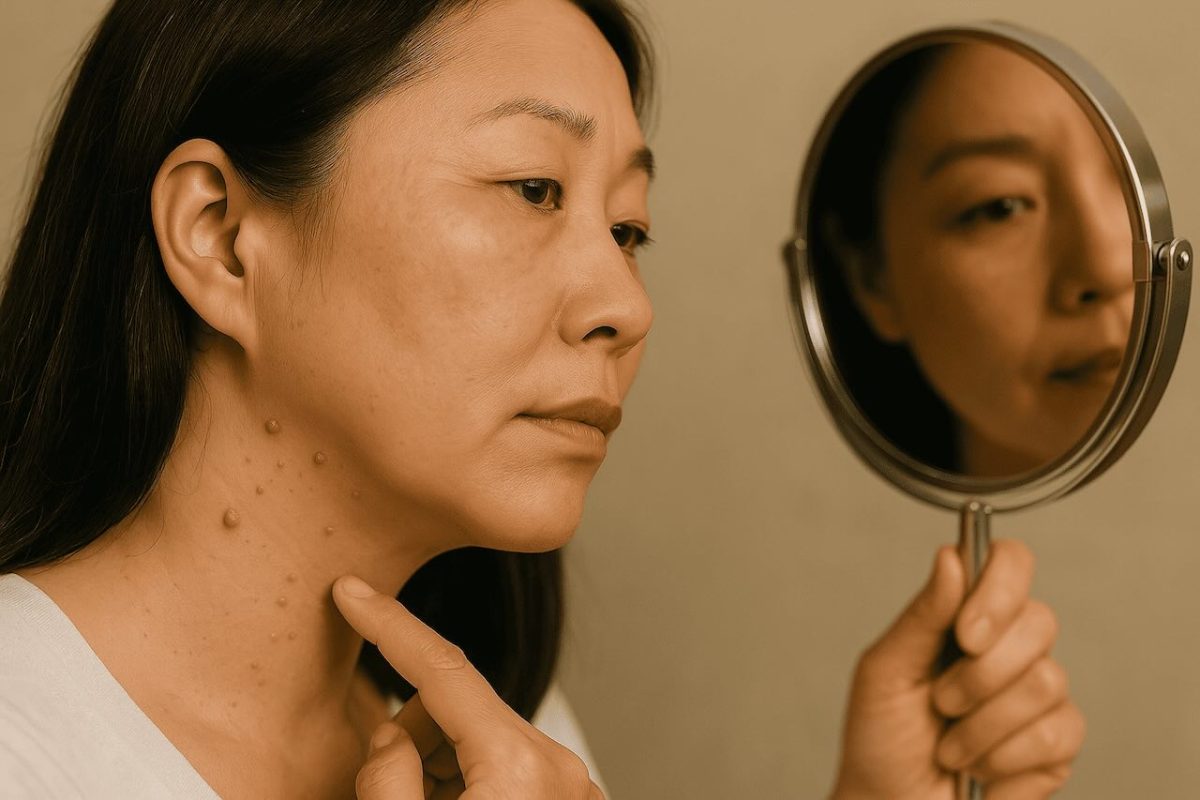
While skin tags are typically benign and harmless, certain signs warrant a consultation with a healthcare provider, such as a family doctor or dermatologist. It is essential to seek medical advice if a growth:
- Changes in colour, size, or shape.
- Becomes painful or tender.
- Starts bleeding with minimal or no trauma.
- Appears suddenly in large numbers.
- Is larger than a centimetre.
- If you are unsure whether it is a skin tag or another type of growth.
These changes could indicate a different, potentially more serious, skin condition that requires evaluation. Moreover, if skin tags are causing discomfort due to constant rubbing or catching on clothing/jewellery, professional removal can provide relief.
Professional Skin Tag Removal Options
For those who wish to have skin tags removed, professional procedures performed by a healthcare provider are the safest and most effective methods. These minor procedures are typically performed in a clinical setting and often involve local anaesthesia to minimise discomfort. The common professional removal techniques include:
- Excision: This involves carefully cutting off the skin tag with sterile surgical scissors or blades. For any concerning-looking skin tags, the removed tissue may be sent to a lab for microscopic examination to confirm it is not cancerous.
- Cryotherapy: This method involves freezing the skin tag off using liquid nitrogen. The skin tag typically falls off after a few days.
- Cauterisation (Hyfrecation): This procedure uses heat or electrical energy to burn off the skin tag.
- Ligation: This involves tying off the base of the skin tag with a surgical suture to cut off its blood supply, causing it to fall off.
Complications from these procedures, such as heavy bleeding or infection, are rare when performed by trained professionals. Once a skin tag is removed, it does not grow back in the same spot, although new ones may form elsewhere if predisposing factors persist.
Home Remedies and Over-the-Counter Treatments
Despite the tempting nature of do-it-yourself solutions, healthcare providers generally do not recommend attempting to remove skin tags at home. Many home remedies and over-the-counter (OTC) products carry significant risks, including pain, bleeding, incomplete removal, infection, and scarring.
- Cutting or snipping: Using scissors, nail clippers, or tweezers at home is strongly discouraged, as these tools are often not sterile or sharp enough. This can lead to excessive bleeding, open wounds vulnerable to infection, and scarring.
- Tying off with a string: While this method might work by cutting off the blood supply, it carries the risk of misidentifying the growth. It is important to ensure it is not a mole or another type of lesion before attempting this.
- Over-the-counter cryotherapy kits: These kits are often not cold enough to effectively remove skin tags and can lead to scarring or discolouration of the surrounding skin by destroying melanocytes.
- Removal creams and patches: Many OTC creams and patches containing chemicals like salicylic acid or essential oils are available, but there is no research indicating their effectiveness, and none are approved by the FDA.
- Natural remedies: Popular “natural” remedies like apple cider vinegar, nail polish, nail polish remover, raw garlic, banana peels, tea tree oil, vitamin E, and iodine are generally ineffective and can be harmful. For example, apple cider vinegar can cause contact dermatitis or infection, nail polish remover contains acetone, which is toxic in high amounts, and garlic can cause skin irritation.
How to Prevent Skin Tags

While not all skin tags can be prevented, certain lifestyle choices and skincare practices can help reduce the likelihood of their development or recurrence. These include:
- Maintaining a healthy weight to minimise friction in skin folds.
- Wearing loose, breathable clothing to reduce irritation in prone areas.
- Practising good skincare, such as keeping the skin clean and dry, regular moisturising, and using non-soap cleansers.
- Using powder or barrier creams in specific areas to reduce rubbing and irritation if you notice tags developing.
- Managing underlying conditions like diabetes and metabolic syndrome, as these are strongly associated with skin tag formation.
Prognosis and Complications
Skin tags are almost always benign and have a very low to no risk of malignancy. They typically grow slowly over time. However, they can increase in size due to constant friction.
Complications are rare, but a skin tag can become inflamed if it twists on its pedicle, a risk increased in obese individuals. While professional removal is generally safe, potential complications can include:
- Bleeding
- Infection
- Scarring or changes in the cosmetic appearance of the skin
- Mild irritation or irritant dermatitis
- Rarely, a neuroma, which is a nerve growth in the skin that can result in chronic pain for weeks or months if a nerve is cut during removal.
Once a skin tag is removed, it does not typically reappear in the exact same spot. However, the predisposition to develop skin tags may lead to new ones forming in other areas over time. Regular self-skin checks are advisable, especially if you have risk factors for skin conditions.
Explore Malaysia’s Leading Skin Tag Treatment Clinic
Dr Chong Clinic is a trusted aesthetic provider in Malaysia, offering professional solutions for skin tag concerns and other skin conditions. With LCP-certified doctors, personalised treatment plans, and advanced technologies across nationwide branches, the clinic ensures safe, effective results.
Visit a Dr Chong Clinic near you today for expert care.
Frequently Asked Questions (FAQ)
1. Are skin tags dangerous or cancerous?
No, skin tags are benign (non-cancerous) growths and almost never pose a health risk. However, if a growth changes in size, shape, or colour, or begins to bleed, it should be examined by a doctor to rule out other conditions.
2. Can skin tags fall off on their own?
Yes, in some cases skin tags may rub off or fall off naturally, especially if they are located in areas of high friction. However, most skin tags remain unless removed professionally.
3. What is the safest way to remove skin tags?
The safest and most effective way to remove skin tags is through professional medical procedures such as excision, cryotherapy, cauterisation, or ligation. These methods minimise the risk of infection, bleeding, and scarring compared to at-home attempts.
4. What services does Dr Chong Clinic provide?
Dr Chong Clinic offers a wide range of aesthetic and dermatological services Pico Lasers, hyperpigmentation treatments, and acne management. Our procedures are carried out by LCP-certified doctors using modern technologies.
*All images used in this article are AI-generated.