Blog
Solar Lentigo: Punca, Pencegahan & Rawatan

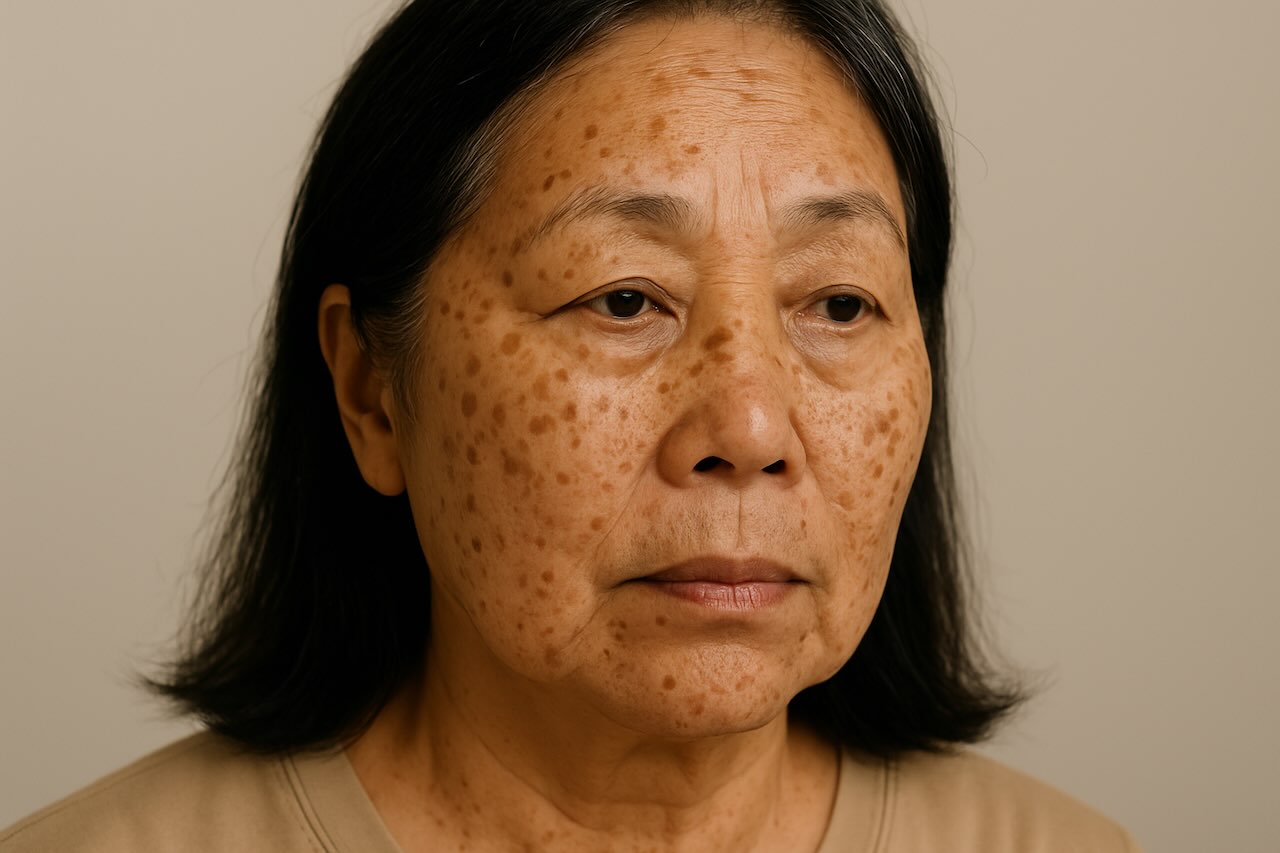
Adakah anda perasan tompok gelap pada kulit anda yang seolah-olah muncul entah dari mana? Dikenali sebagai lentigin solar, bintik-bintik ini cenderung muncul seiring bertambahnya usia. Dalam panduan ini, kami akan membantu anda memahami apa itu lentigin solar, mengapa ia terbentuk, cara mencegahnya, dan apa yang boleh anda lakukan jika anda mahu ia dirawat.
Apakah itu Lentigin Solar?
Lentigin solar ialah bintik-bintik rata, coklat, sawo matang, atau hitam yang terbentuk pada kawasan kulit anda yang kerap terdedah kepada cahaya matahari. Tanda-tanda ini, yang sering dipanggil bintik-bintik penuaan, bintik-bintik matahari atau bintik-bintik hati, mungkin lentigin solar.
Walaupun ia biasanya tidak berbahaya, ramai orang mendapati ia mengganggu, terutamanya apabila ia menjadi lebih ketara dari semasa ke semasa dan menyumbang kepada hiperpigmentasi pasca-radangyang tidak sekata selepas bersalin. Tidak seperti bintik-bintik, yang mungkin pudar pada musim sejuk, bintik-bintik penuaan cenderung kekal sepanjang tahun.
Bintik-bintik ini boleh menjadi kecil seperti bintik-bintik atau lebih besar, kadangkala berdiameter lebih setengah inci. Ia biasanya muncul di muka, tangan, bahu, lengan dan dada anda, iaitu tempat yang paling banyak menerima cahaya matahari. Walaupun kadangkala dipanggil "bintik penuaan," ia bukanlah semata-mata akibat penuaan tetapi sebaliknya tanda kerosakan akibat cahaya matahari yang terkumpul dari semasa ke semasa.
Apakah Punca Bintik Penuaan?
Punca utama bintik matahari terbentuk adalah pendedahan jangka panjang kepada sinaran ultraungu (UV) daripada matahari atau katil penyamakan kulit. Sinaran UV merangsang melanosit, sel yang menghasilkan melanin, untuk menghasilkan pigmen tambahan. Selama bertahun-tahun terdedah kepada cahaya matahari, melanin akan berkumpul di tempat-tempat tertentu, menyebabkan tompok gelap yang kelihatan.
Walaupun pendedahan cahaya matahari adalah punca utama, faktor-faktor tertentu meningkatkan kemungkinan mendapat bintik-bintik ini:
1. Umur
Seiring bertambahnya usia, kesan pendedahan cahaya matahari secara beransur-ansur terkumpul di kulit kita, menjadikan usia sebagai salah satu faktor risiko yang paling ketara untuk bintik-bintik penuaan. Sinaran ultraungu (UV) selama bertahun-tahun menyebabkan sel pigmen menjadi lebih aktif, menyebabkan kelompok melanin yang muncul sebagai tompok gelap pada kulit.
2. Kulit Putih
Individu yang mempunyai tona kulit putih atau cerah secara semula jadi mempunyai kurang melanin, iaitu pigmen yang membantu melindungi kulit daripada sinaran UV. Disebabkan oleh perlindungan yang berkurangan ini, orang yang mempunyai kulit putih lebih cenderung untuk mengalami bintik-bintik matahari selepas meluangkan masa di luar rumah, walaupun dengan pendedahan cahaya matahari yang singkat atau sederhana.
3. Selaran Matahari yang Kerap
Mengalami pelbagai selaran matahari, terutamanya semasa zaman kanak-kanak dan remaja, boleh meningkatkan kemungkinan untuk mengalami lentigin solar di kemudian hari. Selaran matahari menyebabkan kerosakan yang ketara pada sel kulit dan boleh mempercepatkan perubahan pigmentasi, menjadikan kulit lebih terdedah kepada pembentukan bintik-bintik gelap dari semasa ke semasa.
4. Kekurangan Perlindungan Matahari
Mengelak pelindung matahari, pakaian pelindung, atau mencari tempat teduh secara berkala meningkatkan pendedahan kulit kepada sinaran UV yang berbahaya. Tanpa langkah perlindungan ini, kulit lebih mudah terdedah kepada kerosakan yang disebabkan oleh UV, yang boleh mengakibatkan pembentukan bintik-bintik matahari dan tanda-tanda penuaan foto yang lain.
5. Genetik
Sejarah keluarga memainkan peranan dalam sama ada seseorang itu terdedah kepada perkembangan bintik-bintik matahari. Jika ibu bapa atau saudara terdekat anda mempunyai pigmentasi yang disebabkan oleh cahaya matahari, anda mungkin mempunyai kecenderungan genetik untuk mengalami bintik-bintik yang serupa, walaupun dengan pendedahan cahaya matahari yang sederhana. Genetik boleh mempengaruhi bagaimana kulit anda bertindak balas terhadap cahaya UV dan bagaimana ia menghasilkan pigmen.
Mengesan Tanda-tanda Lentigine Suria
Bintik matahari biasanya mempunyai beberapa ciri utama:
- Bintik-bintik itu rata dan licin, tidak seperti tahi lalat atau pertumbuhan yang timbul, dan terletak sejajar dengan kulit anda.
- Sempadannya jelas, dengan tepi yang jelas dan tidak sekata.
- Bintik-bintik cenderung mempunyai warna yang seragam, biasanya kelihatan sebagai warna coklat, perang muda, atau hitam yang sekata.
- Bintik-bintik itu tidak menyakitkan dan tidak gatal, sakit, atau berdarah.
Walaupun tidak berbahaya, adalah penting untuk memantau sebarang perubahan kulit. Jika bintik-bintik itu timbul, berubah bentuk atau warna, atau mula berdarah, berjumpalah dengan pakar dermatologi dengan segera untuk menolak kemungkinan kanser kulit.
Cara Mencegah Lentigine Suria
Pencegahan adalah pertahanan terbaik anda terhadap tompok matahari. Mengambil langkah proaktif sekarang dapat membantu menghentikan pembentukan tompok baru dan mencegah tompok sedia ada daripada menjadi lebih gelap atau lebih ketara. Dengan melindungi kulit anda daripada kerosakan akibat sinar matahari, anda dapat mengekalkan kulit yang lebih cerah dan sekata. Berikut adalah cara anda dapat membantu melindungi kulit anda:
1. Hadkan Pendedahan Matahari Tengah Hari
Pencegahan adalah pertahanan terbaik anda terhadap tompok matahari. Satu langkah penting adalah menjauhi sinar matahari ketika sinar UV paling kuat, biasanya antara jam 10 pagi dan 4 petang. Mengurangkan pendedahan cahaya matahari pada waktu-waktu ini membantu melindungi kulit anda daripada kerosakan yang boleh menyebabkan tompok matahari.
2. Pakai Pakaian Pelindung
Topi, cermin mata hitam, dan baju lengan panjang menyediakan penghalang fizikal yang melindungi kulit anda daripada cahaya matahari langsung. Memakai pakaian pelindung adalah cara yang berkesan untuk meminimumkan pendedahan UV, terutamanya jika anda menghabiskan banyak masa di luar rumah.
3. Gunakan Pelindung Matahari Setiap Hari
Memakai pelindung matahari spektrum luas dengan SPF 30 atau lebih tinggi adalah penting untuk semua kawasan kulit anda yang terdedah. Walaupun pada hari yang mendung, sinaran UV boleh menembusi dan menyebabkan kerosakan, jadi penggunaan pelindung matahari setiap hari adalah bahagian penting dalam pencegahan. Orang yang mempunyai kulit sensitif harus mencari pelindung matahari yang diformulasikan untuk mengurangkan kerengsaan sambil tetap menawarkan perlindungan yang kuat.
4. Elakkan Katil Penyamakan
Sinar UV buatan daripada katil penyamakan boleh sama berbahayanya dengan cahaya matahari semula jadi. Mengelakkan katil penyamakan adalah langkah penting dalam melindungi kulit anda dan mengurangkan risiko bintik-bintik yang disebabkan oleh matahari.
5. Lakukan Pemeriksaan Kulit Secara Berkala
Jadikan tabiat untuk memeriksa kulit anda setiap bulan untuk sebarang bintik-bintik baharu atau yang berubah. Pengesanan awal membantu anda mengenal pasti sebarang perubahan yang membimbangkan dan mendapatkan nasihat perubatan jika perlu.
Bersikap proaktif tentang perlindungan matahari bukan sahaja membantu mencegah bintik-bintik matahari tetapi juga mengurangkan risiko kanser kulit dan penuaan pramatang.
Pilihan Rawatan untuk Lentigin Suria
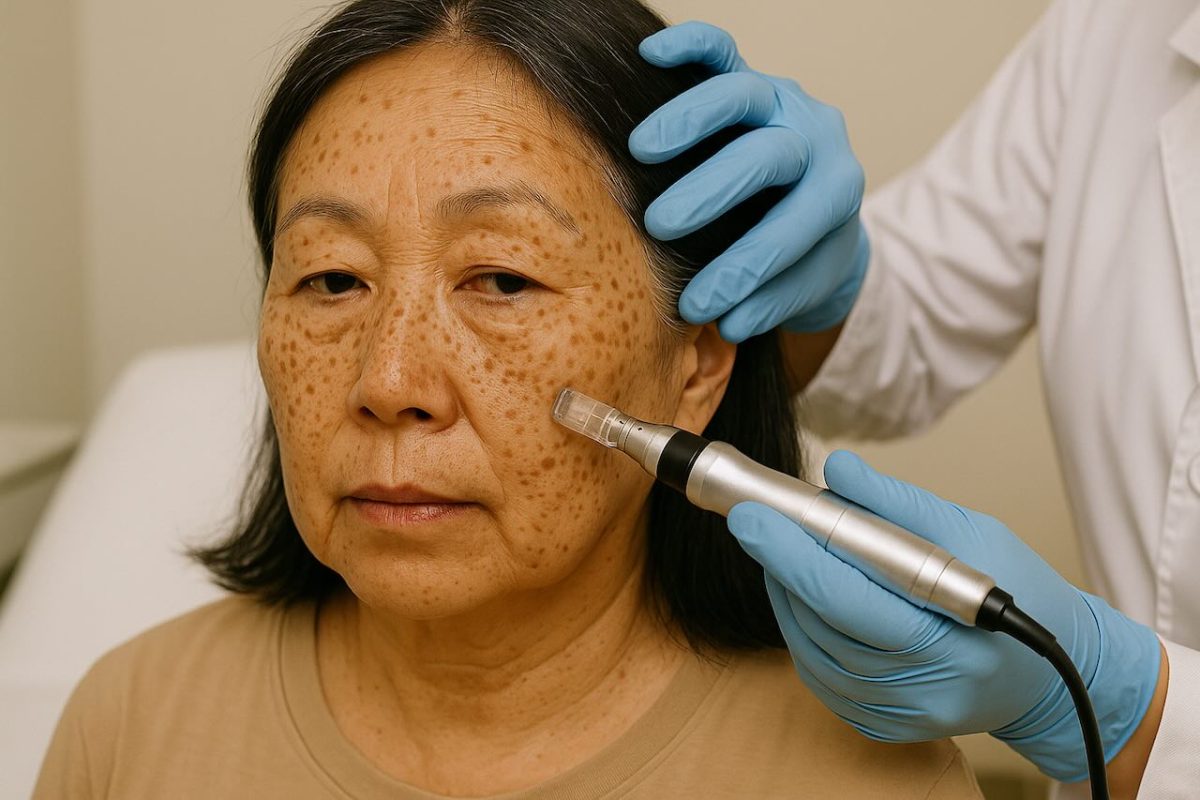
Walaupun lentigin solar tidak berbahaya dan tidak memerlukan rawatan perubatan, ramai orang memilih untuk menanganinya atas sebab kosmetik. Mujurlah, terdapat beberapa rawatan berkesan yang tersedia untuk membantu mencerahkan atau menghilangkan bintik-bintik yang disebabkan oleh cahaya matahari ini.
Krim Topikal
Krim preskripsi yang mengandungi bahan-bahan seperti hidrokuinon, retinoid atau agen pencerah lain boleh membantu memudarkan bintik-bintik penuaan secara beransur-ansur. Krim ini berfungsi dengan memperlahankan penghasilan melanin dan menggalakkan pertukaran sel kulit, yang membawa kepada tona kulit yang lebih sekata dari semasa ke semasa.
Pengelupasan Kimia
Pengelupasan kimia melibatkan penggunaan larutan pada kulit yang menyebabkan lapisan atas mengelupas dan mengelupas. Proses ini membantu mencerahkan pigmentasi dan boleh memperbaiki penampilan bintik-bintik matahari, mendedahkan kulit yang lebih segar dan lebih bersih di bawahnya.
Terapi Laser
Rawatan laser boleh menyasarkan kawasan pigmentasi berlebihan dalam lentigin solar dengan tepat. Tenaga laser memecahkan melanin di bintik-bintik, yang kemudiannya dibuang oleh badan secara semula jadi, menghasilkan kulit yang lebih bersih.
Krioterapi
Krioterapi ialah prosedur di mana nitrogen cecair digunakan untuk membekukan kawasan yang terjejas. Ini menyebabkan sel-sel kulit yang gelap mati dan akhirnya mengelupas, selalunya meninggalkan kulit yang lebih cerah di tempatnya setelah sembuh.
Microneedling
Microneedling menggunakan peranti untuk mengelupas lapisan luar kulit dengan lembut, membantu mengurangkan penampilan pigmentasi dari semasa ke semasa. Rawatan ini dapat meningkatkan tekstur dan tona kulit, menjadikan bintik-bintik matahari kurang ketara dengan sesi berulang.
Keberkesanan rawatan berbeza dari orang ke orang. Pakar dermatologi boleh membantu anda menentukan pendekatan yang terbaik untuk jenis kulit anda dan tahap keterukan bintik-bintik anda.
Rangkul Usia Anda Tanpa Bintik Matahari
Menjadi tua tidak bermakna hidup dengan bintik-bintik matahari yang tidak diingini. Jika bintik-bintik penuaan menjejaskan keyakinan anda, pasukan di Klinik Dr Chong menawarkan rawatan moden dan penyelesaian penjagaan kulit tersuai untuk membantu anda mencapai kulit yang lebih licin dan bersih. Raikan usia anda sambil mengekalkan kulit anda cerah. Tempah konsultasi anda hari ini dan temui semula kulit yang anda sukai.
Soalan Lazim
1. Adakah lentigin solar sama dengan jeragat?
Lentigin solar dan jeragat adalah berbeza. Jeragat sering muncul pada zaman kanak-kanak, pudar pada musim sejuk, dan dikaitkan dengan genetik, manakala bintik matahari berpunca daripada pendedahan cahaya matahari jangka panjang dan cenderung berterusan sepanjang tahun.
2. Adakah lentigin solar merupakan masalah kesihatan?
Ia tidak berbahaya tetapi menandakan kerosakan akibat cahaya matahari, yang boleh meningkatkan risiko kanser kulit. Lindungi kulit anda dan pantau perubahan.
3. Adakah petua di rumah berkesan untuk mencerahkan lentigin solar?
Sesetengah petua semula jadi, seperti jus lemon atau lidah buaya, popular dalam talian tetapi tidak terbukti berkesan. Rawatan profesional jauh lebih dipercayai untuk bintik penuaan yang pudar.
4. Bagaimanakah Lentigin Solar Didiagnosis?
Pakar dermatologi biasanya mendiagnosis bintik penuaan dengan memeriksa kulit. Jika tidak pasti, mereka mungkin menggunakan dermatoskop atau melakukan biopsi kecil untuk menolak keadaan seperti melanoma.
*Semua imej yang digunakan dalam artikel ini adalah dijana AI.